

Battery Engineering · Sodium-Ion Insights
Sodium-ion is moving toward industrial scale. For OEMs, the next question is where it fits, and what changes when it becomes part of a complete battery system.
For years, sodium-ion batteries have been discussed as a promising alternative to lithium-ion. The chemistry offered compelling advantages on paper, but one question remained:
Could sodium-ion move beyond pilot projects and become a commercially relevant battery technology?
Recent developments suggest that transition is beginning.
In September 2026 alone, several major announcements showed sodium-ion technology moving toward significantly larger production and deployment.
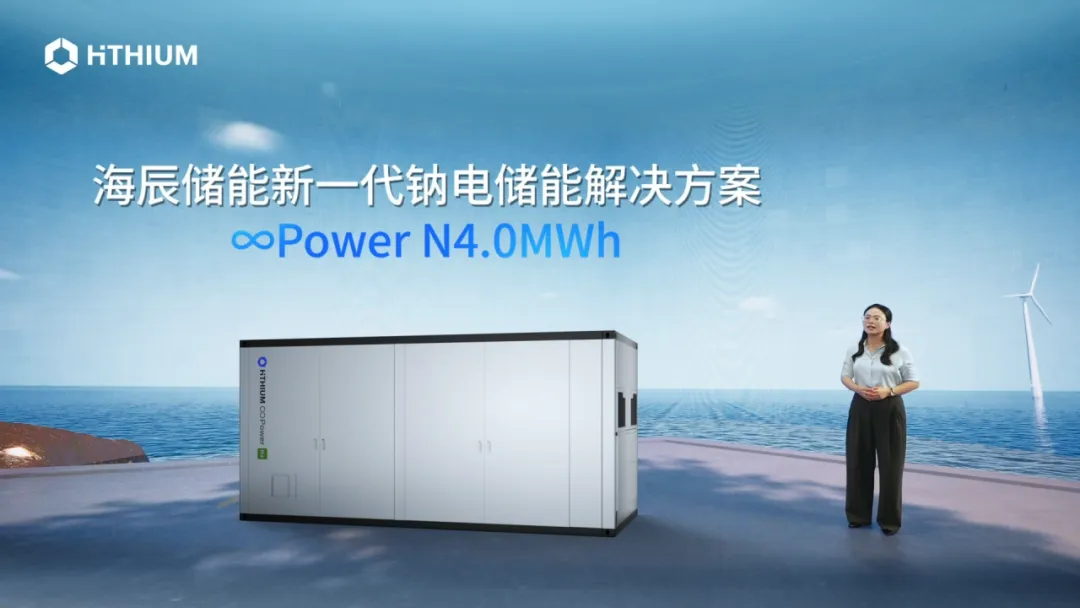
HiTHIUM introduced a 785 Ah sodium-ion cell and 4 MWh energy storage system, with full-scale production and deliveries planned for 2027.
HiNa Battery signed a five-year agreement to supply 10 GWh of sodium-ion batteries to South Korea's Volta, expanding a partnership that previously involved a 15 MWh storage program.
Meanwhile, Clarios, Altris and InoBat announced successful validation of sodium-ion batteries for low-voltage and high-power applications, including cold-cranking performance down to –40°C, as the companies move toward pilot-scale and small-series production.
These are very different applications and companies, but together they point toward the same trend:
Sodium-ion is beginning to move from technology validation toward industrialization.
For battery pack designers and OEMs, however, that doesn't mean sodium-ion should simply replace lithium-ion.
It means another battery chemistry is becoming available, and engineers need to understand where it makes sense.
Sources: HiTHIUM: 785 Ah cell and 4 MWh system announcement · HiNa–Volta supply agreement reporting, September 8, 2026 · Altris: Clarios, Altris and InoBat validation announcement, September 14, 2026.
Sodium-Ion Is Moving Beyond the Pilot Stage
One of the clearest signals comes from stationary energy storage.
In September, HiTHIUM unveiled its new ∞Cell N785Ah sodium-ion battery. The 785 Ah cell is being incorporated into the company's ∞Power N4.0MWh, a 4 MWh sodium-ion energy storage system.
HiTHIUM reports a designed service life of 30 years and a claimed cell service life of 20,000 cycles. The system is intended initially for utility-scale storage, with commercial, industrial and residential applications expected to follow.
Most importantly from a manufacturing perspective, HiTHIUM says the sodium-ion cell is compatible with its existing 1,000 Ah lithium-ion manufacturing platform. The company plans to begin full-scale production and delivery in 2027.
That ability to use existing manufacturing infrastructure could be important as sodium-ion production scales.
Another major development came from HiNa Battery.
The Chinese sodium-ion manufacturer signed a five-year agreement with South Korea's Volta for 10 GWh of sodium-ion batteries.
The scale of the agreement is noteworthy because the companies' earlier cooperation involved a 15 MWh storage program.
Moving from megawatt-hour projects toward gigawatt-hour agreements is exactly the kind of transition the battery industry has been waiting to see.
Sources: HiTHIUM: 785 Ah cell and 4 MWh system announcement · HiNa–Volta supply agreement reporting, September 8, 2026.
Sodium-Ion Is Expanding Beyond Stationary Storage
Grid storage isn't the only area seeing progress.
Clarios, Swedish sodium-ion developer Altris and European battery manufacturer InoBat have been developing sodium-ion technology for low-voltage, high-power applications.
Their latest validation included automotive, heavy-duty, off-highway, commercial vehicle and intralogistics applications.
One particularly interesting result was cold-cranking performance.
The companies reported successful sodium-ion cold-start validation at temperatures down to:
–40°C (–40°F)
That is important because cold-temperature operation is one area where sodium-ion chemistry can offer meaningful advantages.
According to the International Energy Agency's 2026 Global EV Outlook, recent sodium-ion batteries can retain around 90% of nominal capacity at temperatures as low as –40°C, although performance varies substantially by cell chemistry and design.
The Clarios–Altris–InoBat program is now progressing from validation toward pilot-scale and small-series production.
Taken together, these developments demonstrate that sodium-ion isn't being positioned for one narrow market.
Manufacturers are investigating it for everything from large stationary energy storage to low-voltage vehicle systems and industrial equipment.
Sources: Altris: Clarios, Altris and InoBat validation announcement, September 14, 2026 · IEA: Global EV Outlook 2026, Electric vehicle batteries.
So Why Sodium Instead of Lithium?
Sodium and lithium are both alkali metals, and sodium-ion batteries operate according to a broadly similar electrochemical principle to lithium-ion batteries.
During charging and discharging, ions move between the cathode and anode while electrons travel through the external circuit.
That similarity means many concepts familiar to lithium-ion battery engineers remain relevant.
But the materials, and therefore the engineering characteristics, are different.
One obvious advantage is resource availability.
Sodium is extremely abundant and geographically widespread. Sodium-ion chemistries can also reduce dependence on materials such as lithium, nickel and cobalt, depending on the specific cathode chemistry being used.
That can create potential advantages in raw-material availability and supply-chain diversification.
But there are also performance differences that matter when designing an actual battery pack.
Sodium-Ion vs. LFP vs. NMC
There is no universally "best" battery chemistry.
The correct choice depends on what the product needs to do.
One of sodium-ion's biggest current disadvantages is energy density.
The International Energy Agency reports that leading sodium-ion cells can reach approximately 175 Wh/kg, compared with around 205 Wh/kg for newer LFP cells and 265 Wh/kg for NMC cells.
That difference matters.
If an application has very limited space or weight, achieving the same energy capacity with sodium-ion may require a larger or heavier battery than a high-energy lithium-ion design.
That gives NMC a strong advantage in applications where maximum energy must fit into minimum mass and volume.
LFP, meanwhile, already combines relatively strong energy density, long cycle life, good safety characteristics and an enormous existing manufacturing base.
So where does sodium-ion fit?
Its strengths become more interesting when energy density isn't the dominant design requirement.
Cold-temperature operation, material availability, high cycle requirements, safety characteristics, supply-chain diversification and potentially lower material costs can all change the engineering equation.
That is why sodium-ion is attracting particular interest for applications such as:
- stationary energy storage
- industrial equipment
- low-speed electric vehicles
- short-range mobility
- two- and three-wheel vehicles
- low-voltage vehicle systems
- backup power
- cold-weather equipment
- selected powersports applications
For these products, maximizing Wh/kg may not be the first priority.
| Chemistry | Specific energy |
|---|---|
| Sodium-ion | Up to 175 Wh/kg |
| LFP | Up to 205 Wh/kg |
| NMC | Up to 265 Wh/kg |
Cell-level reference figures, not pack specifications or results from a matched test. Pack hardware, usable operating limits and thermal design affect delivered energy density.
Sources: IEA: Global EV Outlook 2026, Electric vehicle batteries.
Sodium-Ion Isn't a Drop-In Cell Replacement for Lithium-Ion
This is one of the most important points for OEM engineers.
Switching battery chemistry isn't as simple as replacing lithium-ion cells with sodium-ion cells of similar dimensions.
The electrical characteristics are different.
Depending on the sodium-ion chemistry and cell design, nominal voltage, maximum charge voltage, minimum discharge voltage and discharge curve can differ significantly from LFP and NMC cells.
Those differences affect the entire battery architecture.
For example, imagine a product designed around a particular lithium-ion pack voltage.
A sodium-ion version may require a different number of cells in series to achieve an appropriate system voltage.
That changes:
Cell count → pack voltage → BMS configuration → charger requirements → enclosure dimensions → wiring → protection settings → system integration.
The chemistry decision therefore needs to happen early enough in the product-development process.
The BMS Has to Understand Sodium-Ion
Battery management is another major consideration.
A BMS designed and calibrated for an NMC or LFP battery should not simply be assumed to work correctly with sodium-ion cells.
The BMS must understand the operating characteristics of the selected cell.
That includes parameters such as:
- maximum and minimum cell voltage
- charge and discharge current limits
- temperature limits
- balancing strategy
- overvoltage and undervoltage protection
- overcurrent protection
- thermal protection
- state-of-charge estimation
- state-of-health estimation
State-of-charge estimation can be particularly important.
Different battery chemistries have different voltage-versus-SOC behavior. Algorithms developed around one chemistry may produce inaccurate estimates when applied to another.
For sophisticated battery systems, the BMS may therefore require chemistry-specific firmware, characterization data and validation.
That is why sodium-ion battery development needs to be treated as a system-engineering problem, not simply a cell-selection exercise.

Cold Weather Could Become One of Sodium-Ion's Most Important Advantages
Cold weather has long been challenging for rechargeable batteries.
As temperature falls, electrochemical reaction rates slow, internal resistance can increase and both available power and usable capacity can decline.
Charging at low temperatures creates additional challenges.
Sodium-ion has attracted considerable interest because certain sodium-ion chemistries demonstrate strong low-temperature behavior.
The recent Clarios, Altris and InoBat validation is a good real-world example.
Successful cold-cranking tests down to –40°C suggest sodium-ion could become particularly interesting for applications that need to deliver significant power after prolonged exposure to extreme cold.
That could include equipment used in:
cold climates, outdoor industrial environments, winter powersports, remote infrastructure, off-highway equipment and certain vehicle applications.
But engineers should still avoid treating "sodium-ion" as one universal specification.
Just as NMC, LFP and LTO cells behave differently, sodium-ion performance depends heavily on the cathode chemistry, anode materials, electrolyte, cell construction and manufacturer.
A –40°C result from one sodium-ion cell design cannot automatically be applied to every sodium-ion battery.
Sources: Altris: Clarios, Altris and InoBat validation announcement, September 14, 2026.
What About Cycle Life?
This is another area where sodium-ion is becoming interesting.
HiTHIUM claims its new N785Ah sodium-ion cell can reach a 20,000-cycle service life in its intended energy-storage application.
That is an impressive number, but engineers should be careful when comparing cycle-life claims between batteries.
Cycle life depends on conditions such as:
- Depth of discharge
- Charge and discharge rate
- Operating temperature
- Charge voltage
- End-of-life definition
- Cell chemistry
- Thermal management
A battery rated for thousands of cycles under controlled stationary-storage conditions cannot automatically be expected to achieve the same result in a high-power mobile application.
This is why cell qualification matters.
Engineers should evaluate cycle-life data under conditions that resemble the actual product.
Sources: HiTHIUM: 785 Ah cell and 4 MWh system announcement.
Pack Size May Be the Deciding Factor
Consider an application requiring 1 kWh of usable energy.
If two cells provide different gravimetric and volumetric energy densities, the resulting battery packs may have very different dimensions and weights, even though both store 1 kWh.
For a stationary cabinet, that difference might be acceptable.
For a handheld medical device, drone or compact robot, it may not be.
This creates a useful way to think about chemistry selection.
If the application says:
"I have a fixed enclosure and need the maximum possible runtime."
High-energy lithium-ion chemistry may remain the stronger option.
If it says:
"I need thousands of cycles and weight is less critical."
LFP or certain sodium-ion designs may become more attractive.
If it says:
"The battery must reliably deliver power in extremely cold conditions."
Sodium-ion deserves serious consideration.
If it says:
"This aircraft needs maximum energy at minimum weight."
Today's sodium-ion cells are unlikely to replace high-energy lithium-ion solely on energy-density grounds.
The application determines the chemistry, not the other way around.
Sodium-Ion Doesn't Mean the End of Lithium-Ion
The current sodium-ion expansion should not be interpreted as lithium-ion being replaced.
Lithium-ion manufacturing is enormous, the supply chain is mature, and decades of engineering knowledge already exist around NMC, LFP and other lithium-based chemistries.
The more realistic future is a multi-chemistry battery industry.
NMC can continue serving applications requiring very high energy density.
LFP can serve applications prioritizing safety, cycle life, cost and proven commercial availability.
LTO can remain valuable where extremely high cycle life, power capability and fast charging justify its lower energy density.
And sodium-ion can increasingly compete where cold-temperature performance, material availability, cycle life, supply-chain considerations and cost are more important than maximizing energy density.
For battery designers, having another viable chemistry is ultimately an advantage.
It means we can engineer the battery around the product rather than forcing every product into the same battery chemistry.
How Should an OEM Decide?
Before choosing sodium-ion, LFP, NMC or another chemistry, an engineering team should define the actual requirements of the application.
That includes:
Required energy (Wh)
How long does the product need to operate?
System voltage
What voltage range does the equipment require?
Continuous and peak current
Does the application have motors, pumps, transmitters or other high-power loads?
Weight and space limitations
How much room is actually available for the battery?
Operating temperature
Will the product experience extreme cold or heat?
Cycle-life requirement
Is the battery expected to last hundreds, thousands or tens of thousands of cycles?
Charging requirements
How quickly must the battery recharge?
Environmental conditions
Will it experience water, dust, vibration, shock or outdoor exposure?
Certification requirements
Which transportation, safety or industry-specific standards apply?
Production volume and supply chain
Will the selected cell remain available throughout the expected product lifecycle?
Once those requirements are defined, chemistry selection becomes much more objective.
The Bigger Story: Battery Design Is Becoming Chemistry-Agnostic
The significance of the latest sodium-ion announcements isn't simply that several companies launched new batteries.
It's that OEMs are gaining another realistic option.
HiTHIUM is preparing a 785 Ah sodium-ion cell and 4 MWh storage platform for full-scale production.
HiNa Battery has expanded a 15 MWh partnership into a five-year, 10 GWh agreement.
Clarios, Altris and InoBat are moving sodium-ion low-voltage batteries toward pilot and small-series production after successful customer and cold-weather validation.
The technology still has limitations, particularly energy density, and lithium-ion remains the established solution for many applications.
But sodium-ion no longer belongs only in discussions about what batteries might look like in the future.
The engineering question is increasingly becoming where sodium-ion makes sense today, and where it may make sense next.
Sources: HiTHIUM: 785 Ah cell and 4 MWh system announcement · HiNa–Volta supply agreement reporting, September 8, 2026 · Altris: Clarios, Altris and InoBat validation announcement, September 14, 2026.


From Sodium-Ion Cells to Application-Ready Battery Systems
As sodium-ion technology moves toward larger-scale commercialization, selecting the right cell is only part of the engineering process.
At Nadion Energy, we work with OEMs to develop sodium-ion battery solutions around the actual requirements of the application, including voltage, capacity, peak and continuous power, runtime, operating temperature, cycle life, available space and environmental conditions.
Our sodium-ion solutions include cylindrical cells, custom rechargeable battery packs, lead-acid replacement batteries, powersports starter batteries, and battery systems for low-speed electric vehicles and industrial equipment.
For custom projects, cell configuration, BMS functionality, charging requirements, mechanical design and system integration can all be developed around the application rather than forcing the product to fit an off-the-shelf battery.
Backed by PHD Energy's Battery Engineering and Manufacturing Experience
Nadion Energy is powered by PHD Energy, bringing established battery engineering and global manufacturing capabilities to the development and commercialization of sodium-ion battery systems.
This foundation allows Nadion Energy to support projects beyond cell selection, from early battery design and prototyping through BMS integration, testing and scalable manufacturing.
As sodium-ion production expands, the opportunity for OEMs is not simply to replace lithium-ion wherever possible. It is to identify the applications where sodium-ion's particular characteristics provide a meaningful engineering advantage.
Developing a product that could benefit from sodium-ion? Contact Nadion Energy to discuss your application, technical requirements and custom sodium-ion battery needs.
FAQ
Frequently asked questions
Is sodium-ion ready to replace lithium-ion in every product?
No. Sodium-ion is progressing toward larger-scale production, but availability and suitability depend on the specific cell and application. Energy density, power, charging, operating conditions and supply continuity all matter.
Can an existing lithium-ion pack simply use sodium-ion cells?
A change in chemistry requires evaluation of voltage limits, series cell count, charging, BMS settings, protection and mechanical integration. Similar cell dimensions do not establish compatibility.
Does the −40°C result apply to every sodium-ion battery?
No. The reported cold-cranking result applies to a particular development program. It does not establish charging capability, usable energy or cold performance for all sodium-ion cells.
How should an OEM compare cycle-life claims?
Compare depth of discharge, current, temperature, voltage limits and the end-of-life threshold. Ask for data that reflects the intended product’s duty cycle.
Where should a custom battery project begin?
Start with energy, voltage, continuous and peak power, enclosure space, weight, operating temperature, charging, service life and applicable certification requirements.
Custom battery development
Start with your application.
Share the requirements that matter to your equipment, from voltage and runtime to temperature, dimensions and peak power.


